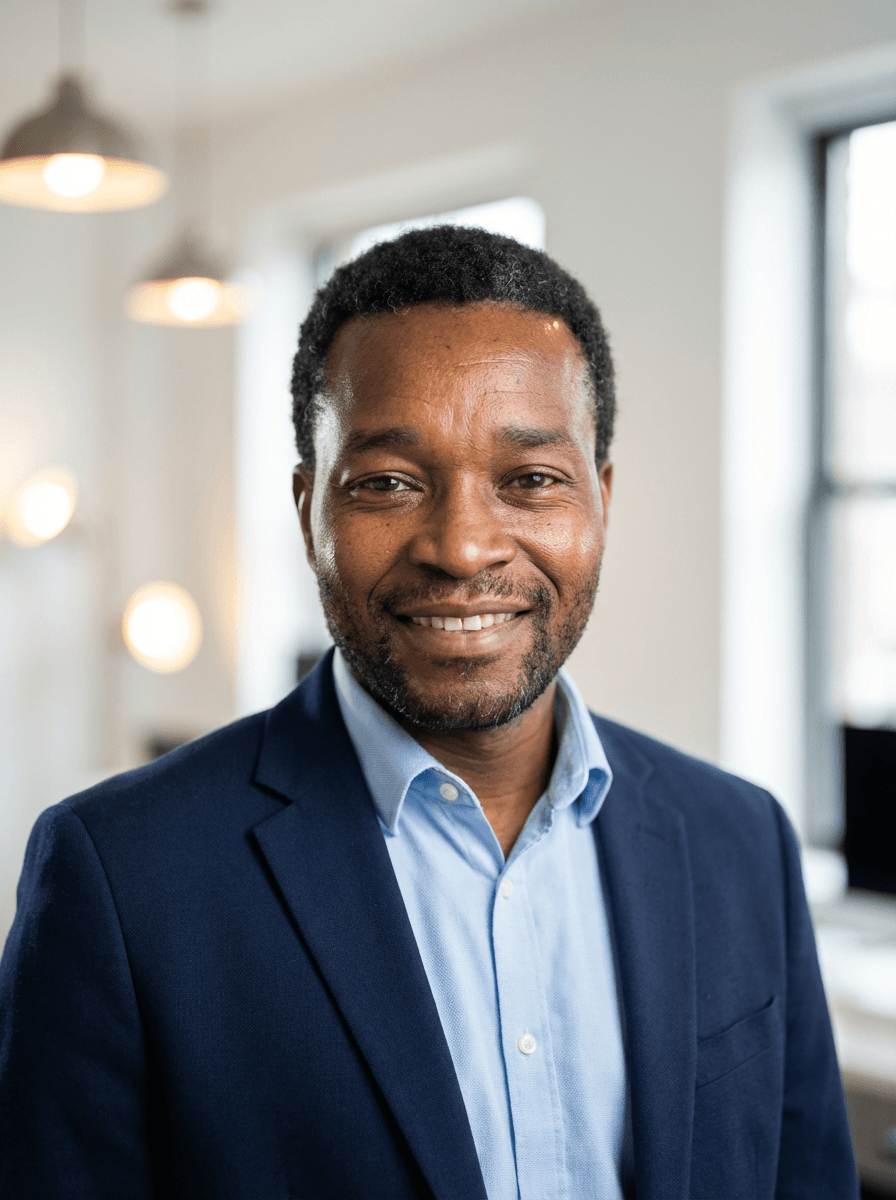
AI headshots moved from novelty to mainstream utility in 2026. A year ago, many professionals still saw AI portraits as experimental: useful for quick mockups, but not polished enough for real business contexts. That changed fast. Better generation models, stronger identity consistency, and faster workflows pushed AI headshots into the same decision category as traditional studio photography.
For most people, the question is no longer "Can AI make a usable headshot?" It is now "When should I use AI, and when should I still hire a photographer?"
This guide compares both options across the factors that matter in real life: cost, speed, quality, control, and fit for specific use cases. The goal is practical decision-making, not hype. Both options have clear strengths, and the right choice depends on what you need right now.
The AI headshot shift in 2026
Three changes explain why this comparison matters more now than in earlier years.
First, model quality improved enough that many AI portraits are immediately usable for LinkedIn, company websites, speaking bios, and email signatures. Skin texture, lighting falloff, and facial structure are significantly more natural than older generations.
Second, workflow friction dropped. Instead of uploading 10-20 images and waiting hours, modern tools often need just a few selfies and can return options in minutes. That makes AI viable for everyday professionals, not only early adopters.
Third, teams adopted AI at scale. HR and operations leads started using bulk workflows to standardize profile photos across remote organizations. The operational advantage is large: no photographer scheduling, no location limits, and no repeated sessions for every new hire.
Traditional photography did not lose relevance. It remains the strongest choice for premium editorial output, high-end brand campaigns, and situations where art direction and human coaching are central. But the baseline changed. AI is now a legitimate first option for many professional portraits.
Cost comparison: AI vs traditional photography
Cost is the fastest way to see the gap.
AI pricing is usually software-style: fixed packages, instant delivery, and predictable output counts. Photographer pricing is service-based: session fee, editing time, potential studio costs, and often add-ons such as retouching or usage rights.
| Option | Typical price range | What you get |
| AI headshot tools | €9.99-49.99 | Multiple generated headshots, usually same-day delivery, optional style/background variants |
| Traditional photographer | €150-500 | Live photo session, guided posing, manually edited finals, often fewer final images |
For individuals updating a LinkedIn profile, the difference is material. Paying €9.99-49.99 for a set of usable photos is a fundamentally different decision than booking a €150-500 studio session.
For teams, the cost gap compounds quickly. A 40-person team using traditional sessions can easily cross several thousand euros once scheduling and retakes are included. AI workflows typically scale with credits, which keeps budgeting straightforward and often much lower.
That said, cost should not be treated in isolation. If your use case requires custom art direction, location-specific storytelling, or executive-level brand photography, the photographer fee buys expertise AI does not replicate.
Speed comparison: minutes versus days or weeks
Speed is where AI often wins by the widest margin.
Modern AI headshot generation generally lands in a 5-15 minute window from upload to downloadable results. You can test multiple styles in one sitting and publish the final image immediately.
Traditional photography is rarely that fast end-to-end. A typical timeline includes:
- Research and booking
- Calendar coordination
- Travel or on-site setup
- Session time
- Editing queue
- Final delivery and selection
In practice, that becomes days or weeks, especially in busy periods or when teams need multiple sessions across locations.
Speed affects outcomes more than most people think. If you are job searching, speaking at an event next week, launching a company page, or onboarding new hires, waiting two weeks for visuals can block momentum. AI removes that delay.
Photographers can still be fast, especially for urgent premium work, but the default process is slower because human time and scheduling are part of the product.
Quality comparison: where AI wins and where photographers still lead
Quality is the most nuanced part of this decision.
AI quality in 2026 is strong enough for many professional contexts. Identity preservation, clean lighting, and realistic detail can be excellent when the input selfies are good. For standard profile usage, most viewers cannot tell whether an image came from a studio or a high-quality AI workflow at first glance.
Still, "quality" has layers, and each option leads in different layers.
Where AI often wins
- Consistency across many people: Team pages look visually aligned without requiring everyone to attend the same session.
- Style variation at low cost: You can generate multiple outfits/background directions quickly and pick what matches your brand.
- Speed-to-quality ratio: Getting several polished options in minutes is hard to beat.
- Update frequency: You can refresh portraits regularly without repeating expensive logistics.
For repeatable professional portraits, AI is often the more efficient quality system.
Where photographers still lead
- Live coaching and expression capture: A skilled photographer can guide posture, confidence, and micro-expression in real time.
- Complex lighting situations: Custom setups, dramatic mood, and intentional visual storytelling still favor human-led production.
- Editorial/artistic direction: Campaign-level images with narrative intent are stronger with a creative team.
- Edge-case accuracy: Hard hair textures, unusual accessories, extreme angles, and motion-heavy concepts remain easier to manage in-camera.
Photographers also provide a human experience that some clients value as part of leadership branding: the session itself helps people feel prepared and camera-ready.
Input quality matters more for AI than most users expect
When AI results disappoint, the issue is often source material, not the model.
AI systems need clear references to preserve identity accurately. Low-light selfies, heavy filters, sunglasses, extreme angles, or blurry uploads can reduce realism. By contrast, a photographer can correct many issues on the spot through direction and lighting adjustments.
If you choose AI, follow a simple capture checklist:
- Use natural, even lighting
- Keep your face unobstructed
- Upload high-resolution photos
- Include a few angles with similar appearance (hair, facial hair, glasses)
- Avoid aggressive beauty filters
These small steps dramatically increase output quality.
Control and revision workflows
Traditional photography offers control during capture. You can adjust pose, lighting, clothing details, and framing in real time with expert feedback.
AI offers control after capture. You iterate style prompts, backgrounds, crops, and output selections quickly. It is less about directing a live set and more about rapid option generation.
Both models support revision, but in different forms:
- Photographer revision: slower cycle, higher precision per change, often extra retouching cost
- AI revision: fast cycle, many options, lower per-iteration cost
If your team needs many approved variants for multiple platforms, AI iteration speed can be a major advantage. If you need one definitive executive portrait with custom nuance, a photographer may remain the better fit.
Use case guide: which option to choose
Most decisions become clear when mapped to a specific context.
Best use cases for AI headshots
- LinkedIn updates and job search profiles
- Company team pages with distributed staff
- Email signatures and internal directories
- Fast refreshes after style changes (new hair, glasses, role changes)
- Startups and small businesses with tight timelines and budgets
In these scenarios, AI provides enough quality, faster turnaround, and better economics.
Best use cases for traditional photographers
- Executive branding sessions
- PR announcements requiring bespoke imagery
- Editorial features and magazine-style portraits
- High-end campaign visuals with art direction
- Situations where live coaching is essential
In these cases, the photographer's creative direction and real-time expertise justify the higher cost and longer timeline.
Hybrid approach (often the practical winner)
Many organizations now run a hybrid model:
- Use AI for baseline team coverage and frequent updates
- Use photographers for leadership shoots and campaign moments
This captures the efficiency of AI without giving up the craft advantages of traditional photography where they matter most.
Team and operations perspective
For HR, people ops, and marketing teams, the decision is not only visual. It is operational.
Traditional sessions create recurring coordination overhead:
- Booking photographers by region
- Aligning employee schedules
- Managing no-shows and rebooks
- Waiting on edits
- Handling new hires after the session date
AI replaces most of this with a repeatable process: invite teammates, share guidelines, review outputs, publish. The result is faster onboarding and a more consistent brand surface.
This matters most in remote and hybrid companies. Teams can be in different countries and still get matched-looking headshots without travel budgets.
Risk and trust considerations
Both options carry different risks.
With AI, key risks include:
- Inconsistent results if source photos are weak
- Overprocessed outputs if style settings are too aggressive
- Internal skepticism if teams are unfamiliar with AI-generated media
With photographers, key risks include:
- Budget overruns
- Delays from scheduling or editing backlogs
- Visual inconsistency across multiple photographers and locations
Mitigation is straightforward for both:
- For AI: provide clear selfie requirements, define style guidelines, and run quick review loops.
- For photography: standardize briefing, retouching expectations, and reference examples across vendors.
Decision framework: 30-second rule
If you need a fast recommendation, use this:
Choose AI when budget and speed are priorities and the image is for standard professional channels.
Choose a photographer when brand stakes are high, you need custom art direction, or the photo itself is central to a premium campaign.
Choose both when you need scalable consistency for the broader team plus high-touch creative output for leadership or marketing moments.
Conclusion: AI is now the default for many professional headshots
In 2026, AI headshots are no longer a backup option. For many individuals and teams, they are the default because they deliver strong quality at dramatically lower cost and faster speed.
Traditional photographers remain essential for top-tier creative and highly directed work. But for day-to-day professional identity across LinkedIn, websites, and communication channels, AI now covers most needs with far less friction.
If your goal is to move quickly, stay consistent, and control costs, AI will usually be the right first step. If your goal is signature imagery with deep art direction, bring in a photographer.
Most modern organizations benefit from both, used intentionally.
Ready to test the AI path yourself? Create your Northside Studio headshots now.